New researcher – how to get started!
New researcher - how to get started!
Find out how to use the Danish National Archives in your research. Use original records from the National Archives' collection of records and data dating from 1100 to today

1,000 years of archives and data
The Danish National Archives’ holds approximately 500 shelf kilometres of paper records and the same volume of born-digital data stored in digital systems.
The archives span from the 12th century to the present.
Our collections include records from:
- Central administration
- Local government
- Businesses
- Institutions and organisations
- Private individuals
Key terms
Archival records
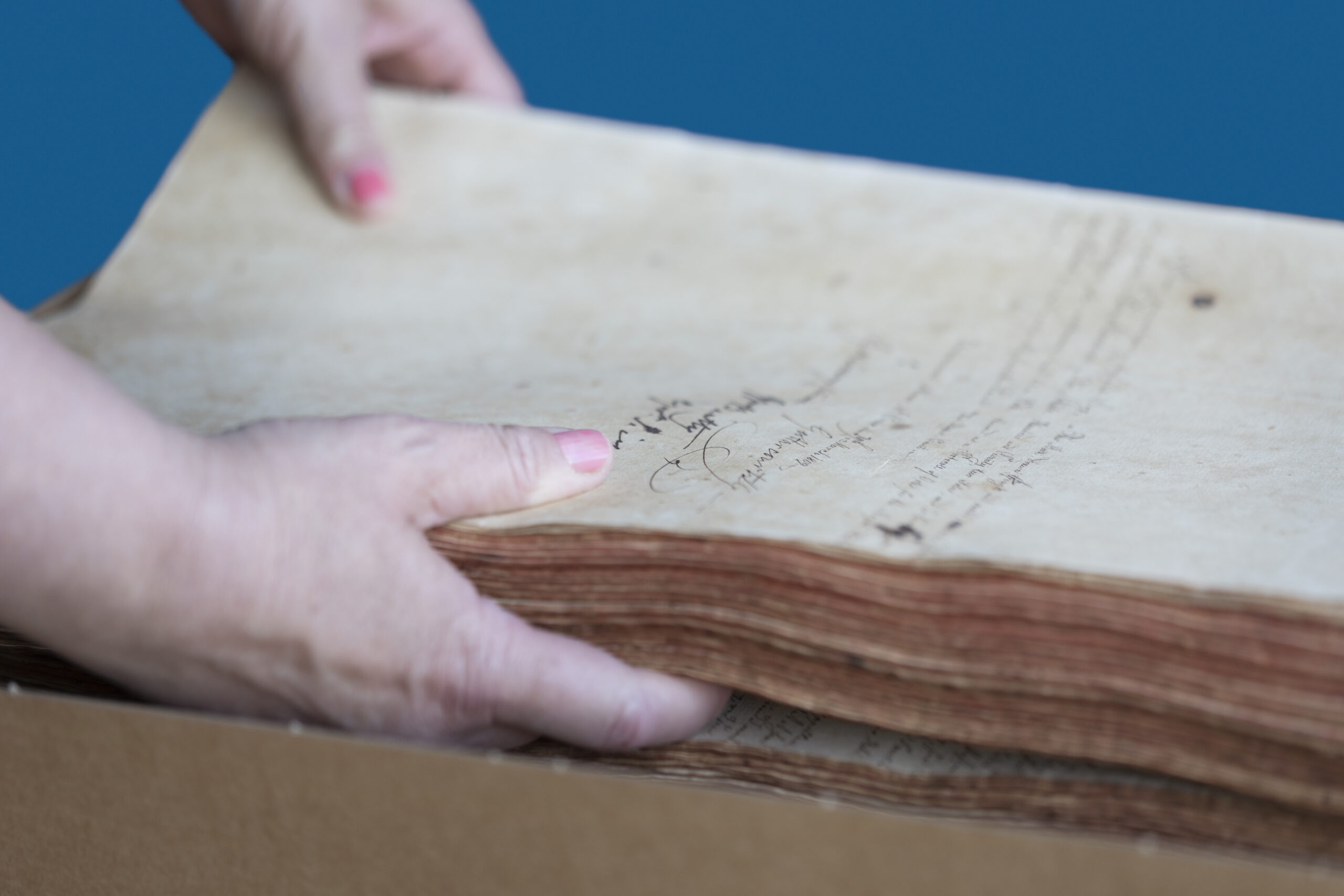
The National Archives receives materials both in paper form and as born-digital data. Collectively, we refer to the papers and data we store as archival records.
Creator
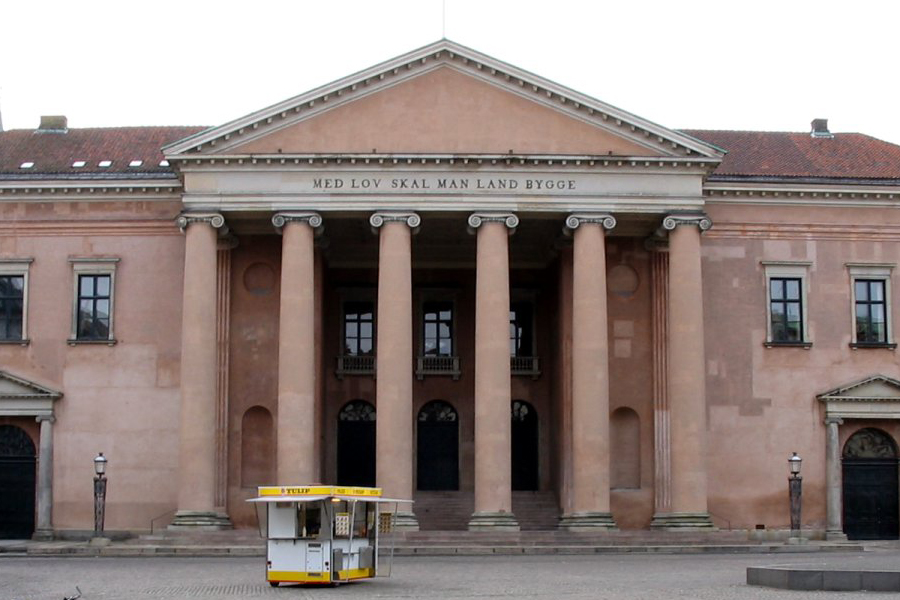
Archival records in the National Archives are organized under the archive creator – the entity that created (and submitted) the records. Archive creators can include authorities, institutions, businesses, organizations, or private individuals.
Archive series
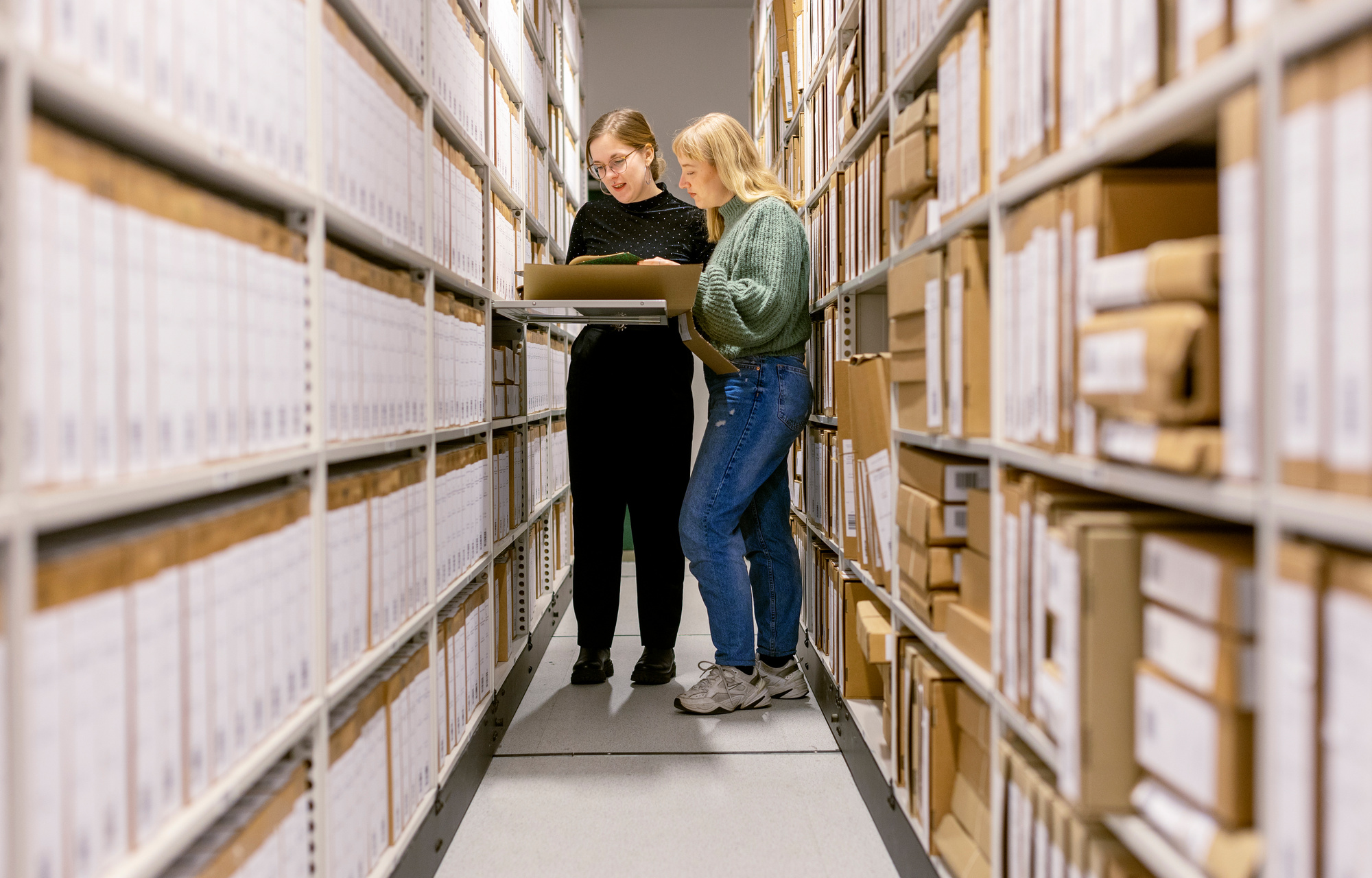
All archival records belong to an archive series. A series may consist of one or many packages. Series with multiple packages are organized according to a uniform system, such as by year and case number.
Units / packages
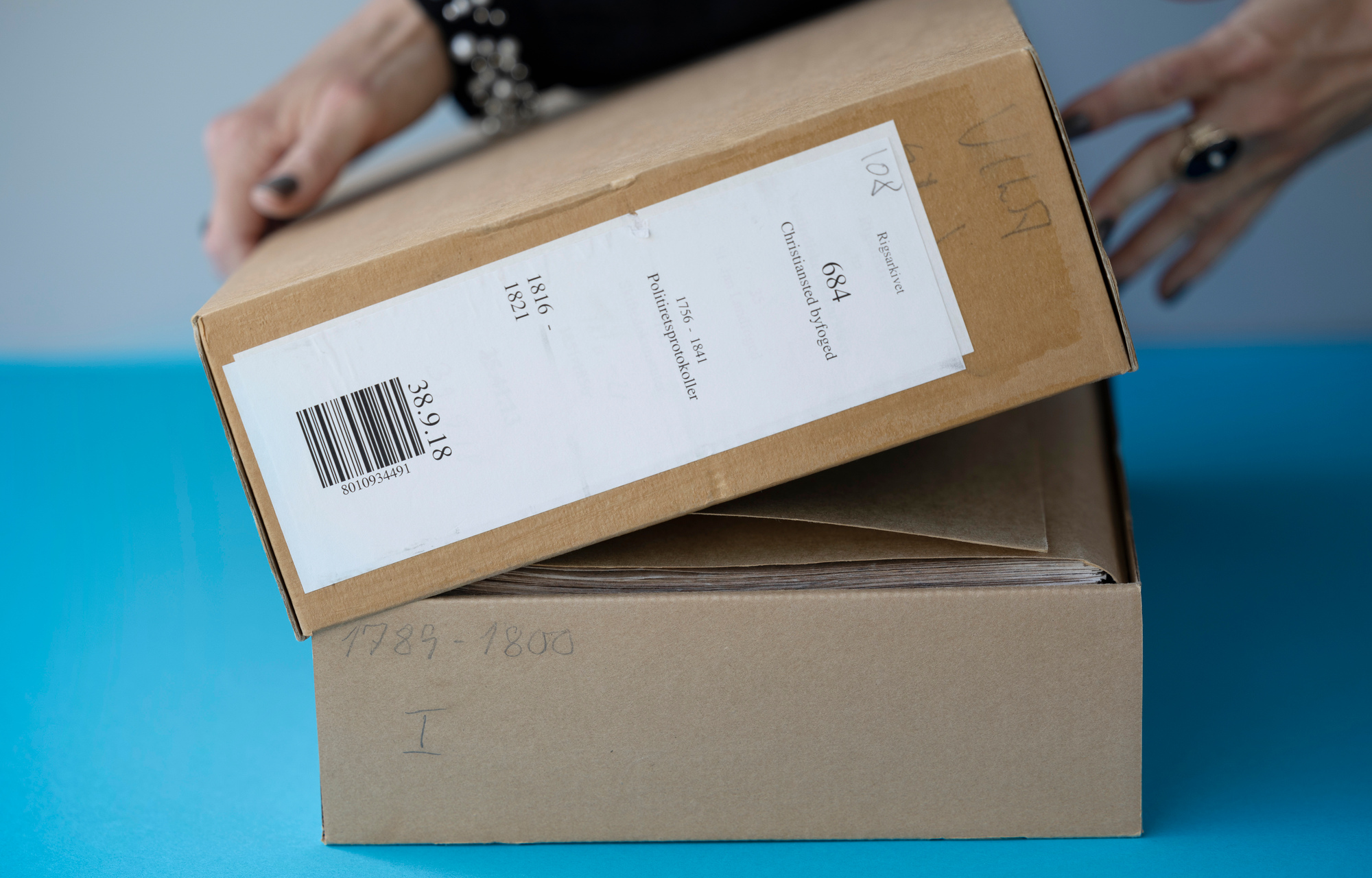
Paper records are stored in packages. When ordering materials for the reading room, you always request one package at a time. All packages are catalogued and can be searched in Daisy.
Cases
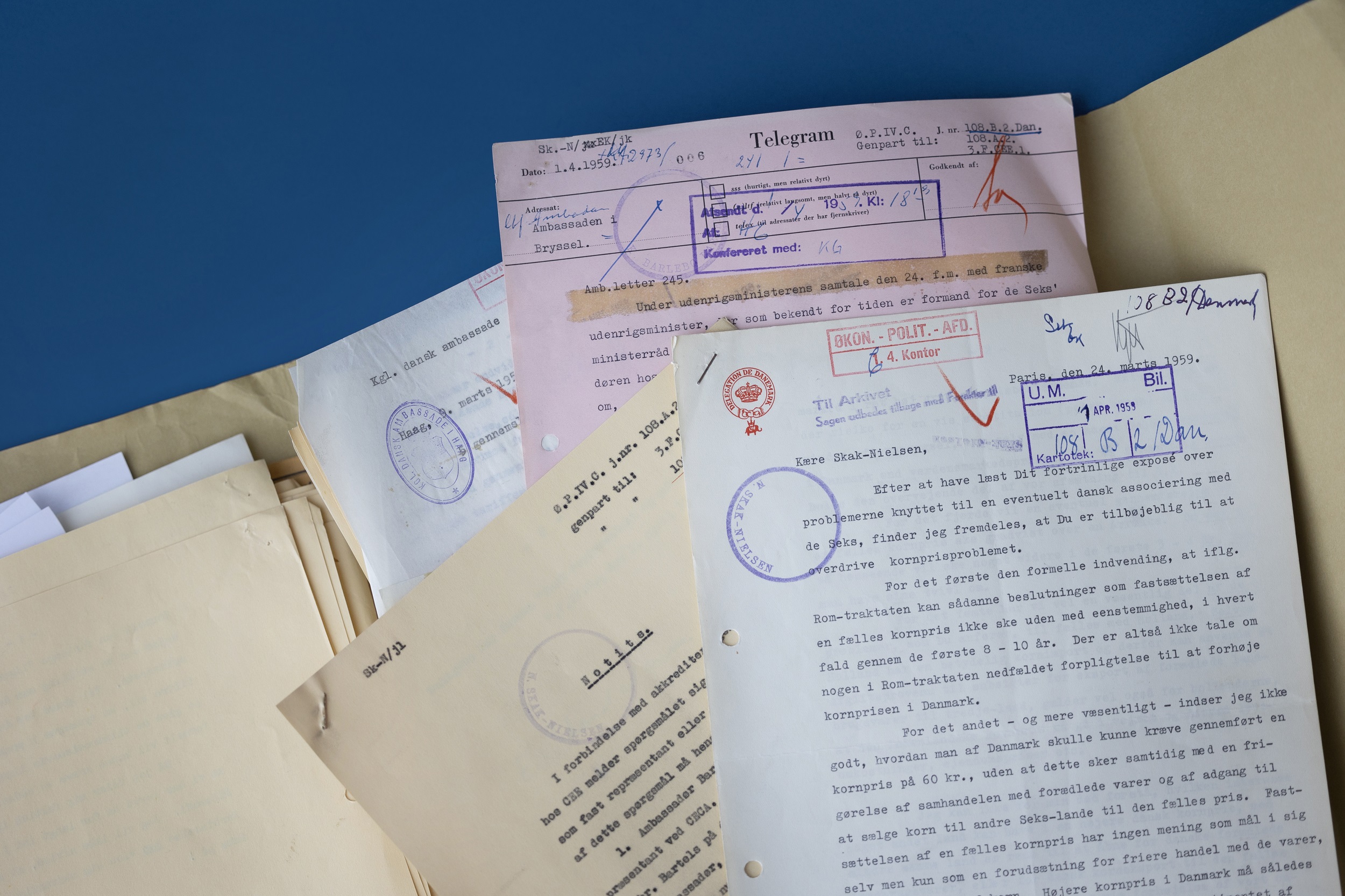
Archival records created by the authorities are typically divided into cases by period. Cases are usually numbered, and case numbers are typically found in finding aids.
Finding Aids
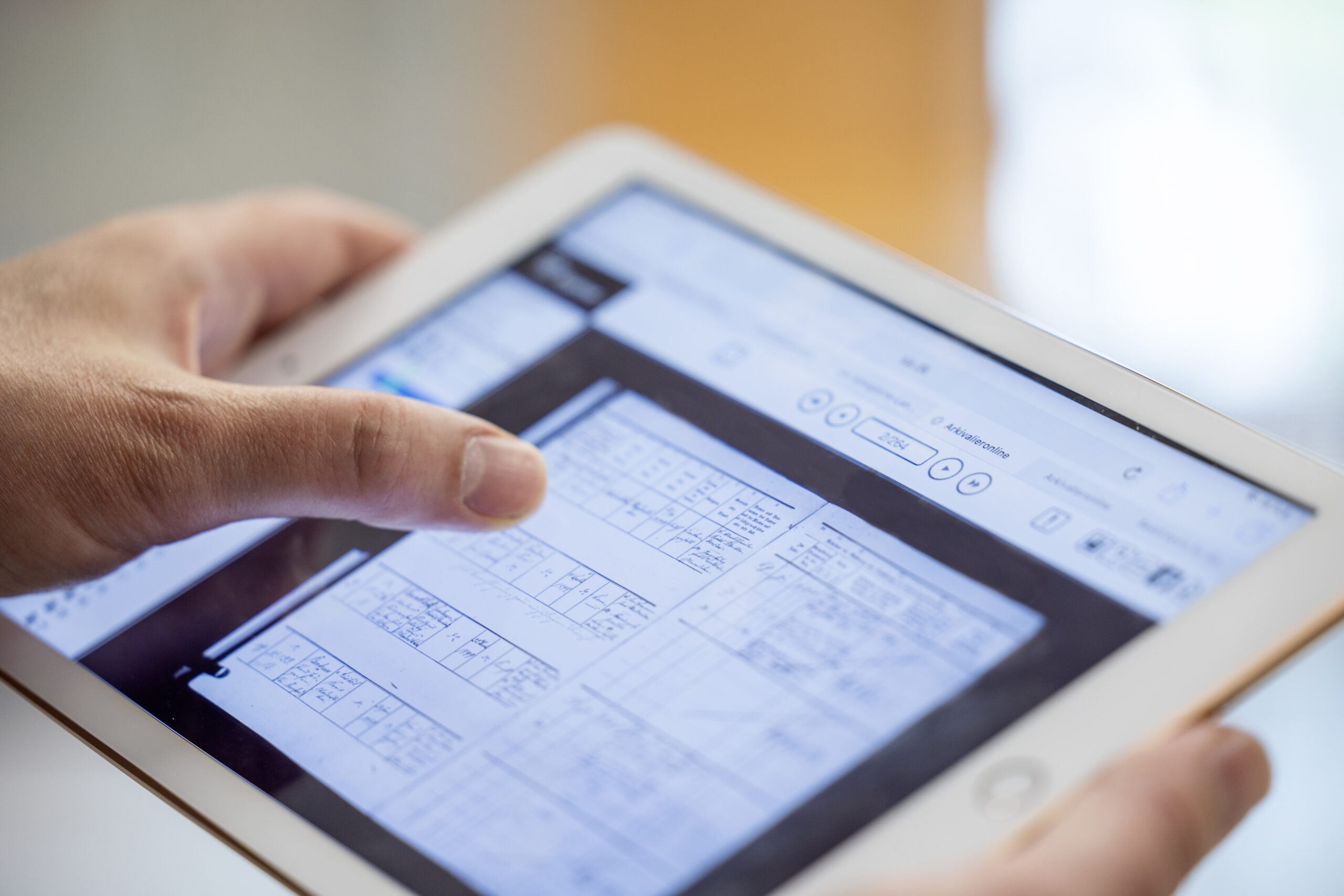
Finding aids contain references to cases, such as case numbers, and make it possible to locate the case within the archive series. Finding aids can include name registers, card indexes, journals, case lists, etc. Many finding aids are digitized and available on Arkivalieronline.
How archives are organized: The Principle of Provenance
The National Archives divides archival material according to the authorities and other entities that created them. We collectively refer to these as record creators. We hold archival materials from over 110,000 record creators. The materials are grouped into record series under each record creator. We preserve, as far as possible, the arrangement established by the authorities themselves.
This method of organizing collections is called the principle of provenance. It means that you should search for information in the finding aids (registers, etc.) that the authorities themselves created to locate files within their archives.
Searching by specific subjects
The National Archives does not maintain a systematic subject-based access point to record creators and record series.
When you wish to search for information and sources on a particular subject within a specific period, you should ask yourself which authorities had administrative responsibilities in that area during the period in question. Similarly, you may consider whether there were companies, associations, organizations, or private individuals whose activities touched upon the subject.
Since the archives are organized according to provenance—and are therefore not divided by subject across record creators—you will often need to search for material on the subject in several different archives.
You may try a full-text search through “Search in Collections.” Here, you search all text used to describe record creators, record series, and storage units (the packages of a record series), as well as entered sources.
Please note that the platform is only available in Danish.
Systematic registers of archives
You can search the systematic registers below covering state and local offices, institutions, authorities, etc.
These registers provide a certain degree of detail regarding the administrative tasks of the respective authorities. Similarly, you can consult an industry-ordered register of corporate archives. These registers serve as topical entry points to the collections. Full-text search is available within the scanned systematic registers.
Please note that the registers are only available in Danish.
View registers and inventories
Good archival references last forever
We recommend that you always create proper archival references, even for materials found online, such as on Arkivalieronline. This ensures that both you and others can relocate the documents, regardless of how they are presented online in the future.
Read more about archival references on page 15 in the guide Rigsarkivet og hjælpemidlerne til dets benyttelse (The Danish National Archives and its finding aids I).
How to write a reference:
- Archival institution
- Record creator
- Record series
- Case number or page number
- Period or date
Example: Danish National Archives, Statsamtet Overpræsidiet, AJ-sager, No. 1325, 1890.
Guides on specific subjects
We offer many guides on how to search for specific topics. These guides are in Danish, and cover topics such as:
- Child support, divorces, probate
- Stays in institutions, hospitals, etc.
- Court cases
- Property information
- War and occupation
About finding aids, journals, and case files
Once you have identified a record creator (arkivskaber) in which you wish to search for your topic, you must familiarize yourself with the archive series. Parts of a record creator’s archive may be organized into thematic packages. These can be located via the archive series names.
However, in most larger record creators, the majority of cases are filed in series known as Journalsager (Journal Cases), where cases are indexed by journal numbers. Your search should begin by consulting the Journalregister (Journal Register). These registers often utilize a combination of subject groups and alphabetical lists of the parties involved in a case.
The Journal Register provides the case’s journal number. With this number, you can proceed to the Journal. In the journal, incoming and outgoing correspondence related to the case is recorded. Alternatively, you may go directly to the case file using the journal number; however, please note that a case may be referenced in a newer case regarding the same subject. Such references will be noted in the journal.
Search and order
You can search for and order all archival materials via “Search in Collections” (Søg i samlingerne).
Born-digital data – from 1970 onwards
The earliest electronic registers from public authorities (e.g., tax registers) date back to the 1970s. In the 1980s, major authorities and institutions began using computerized journals (edb-journaler) to manage their cases.
From approximately 2000, the implementation of Electronic Document and Records Management Systems (EDRMS/ESDH) began, where cases are also stored electronically, either as files or as scanned paper letters.
Additionally, we have received numerous datasets from researchers and analysis institutes derived from research studies and survey data. These studies were created from the 1970s onwards.
More born-digital data:
- Registry data
- Survey data
- Government data – An introduction
- The Danish National Election Study
- Find more data collections on the Danish website
You can search for electronically created data via the “Born-digital data” search function. This displays metadata for systems and studies. You can also search for them via “Search in Collections,” which redirects you to “Born-digital data.”
Ordering data
If data contains CPR numbers or other personal data, you must apply for permission. If the data you seek is less than 20 years old, you must always apply for permission.
You apply for access via “Search in Collections” and “Born-digital data.” Please be aware that processing access applications takes considerable time, partly because applications often require consultation with the transferring authority and potentially the Danish Data Protection Agency (Datatilsynet).
Many research datasets and survey data, as well as a smaller number of publicly created computer systems, do not contain personal information. If such information is older than 20 years, it can be ordered freely.
If freely accessible data has not been pre-prepared (oparbejdet), you order preparation by selecting ‘Apply for Access’. If the data is already prepared, you can download it immediately via “Born-digital data.” However, if you gain access to computerized journals and EDRMS systems, these must be used at one of the National Archives’ reading rooms.
Access to archival materials and data younger than 75 years
If you wish to use archival materials younger than 75 years that contain personal information about named individuals, you must first apply for permission.
The National Archives assesses whether your research purpose allows you to use the information without disclosing confidential details. This is possible, for example, if you can use the information in anonymized form.
Contact us
If you have specific questions, or if you require broader guidance on possible sources for a research project, please write to us. You can also call our switchboard.
Research at the Danish National Archives
Researchers at the National Archives are specialists in their respective areas. Find staff and their areas of research.
Visit the archive
If you need to read paper archival materials that have not been scanned, or computerized journals and EDRMS systems, you must order the material to a reading room.
The Danish National Archives has four reading rooms. You can order records to the reading rooms in Copenhagen, Odense, Viborg, or Aabenraa. At the reading rooms, you can receive assistance from a member of the National Archives’ staff.
See also

Addresses, opening hours and guidelines
Find addresses, opening hours and guidelines for the Danish National Archives’ reading rooms in Copenhagen, Odense, Viborg and Aabenraa.

Ordering of records and rules for loans
When you wish to loan records to use in a reading room, you must order them from the repository. You order records in the archive database Daisy.

Online records
In Arkivalieronline you will find all of the Danish National Archives’ digitized documents (mainly danish). Note that only about 2% of the collections are digitized.