New to genealogy – Get started!
New to genealogy – Get started!
Read about how to begin as a new genealogist. From the necessary preparation to using the collections of the Danish National Archives to find your ancestors.

What is genealogy?
A typical genealogist tries to gather as much information as possible about their own ancestors—parents, grandparents, great-grandparents, great-great-grandparents, and so on. Some also work backward, searching for living relatives based on a common ancestor or ancestress.
Your ancestors are found in various archival records
In archival records, you can find information that authorities have documented when your ancestors, for various reasons, were in contact with public institutions and authorities. This could include events such as baptism, confirmation, marriage, burial, divorce, adoption, property purchases, legal cases, education, and conscription.
Since the records in the archives were created by different authorities, there are no archival collections that compile all information about a single individual. You cannot simply look up a name and get an overview of all documents describing that person’s life.
Phases of genealogical research
Genealogy requires preparation
You must find the information about your ancestors in the archival records yourself, so it is important to be as well-prepared as possible. Start by interviewing the oldest members of your family, searching through family heirlooms, and gathering as much information as possible about your ancestors. The more details you have about your ancestors, the better your starting point for locating them in the archives.
It is also a good idea to attend one of the many genealogy courses offered nationwide or to read a book on the subject. Several excellent handbooks have been published for beginners in the challenging yet fascinating art of genealogy.
Essential information
To get started with genealogical research, you should gather the following information about as many ancestors as possible:
- Name
- Year and parish of birth
- Year and parish of death
It is usually not crucial to know the exact birth date; knowing the name, approximate year, and – most importantly – the parish is sufficient. Births and deaths were recorded chronologically in the parish registers of each church, and it was only with the introduction of the CPR register in 1968 that Denmark established a unified national registry of individual birthplaces.
Collections in the Danish National Archives
The Danish National Archives holds approximately 500 kilometers of paper records and a similar amount of digital data from the last 40–50 years. The collections include records from central and local administrations, businesses, associations, and private individuals.
The National Archives organizes records according to the authorities or entities that created them, collectively referred to as “record creators.” There are records from over 110,000 record creators, and the records are grouped into series under each creator.
Key terms to know
Archival records
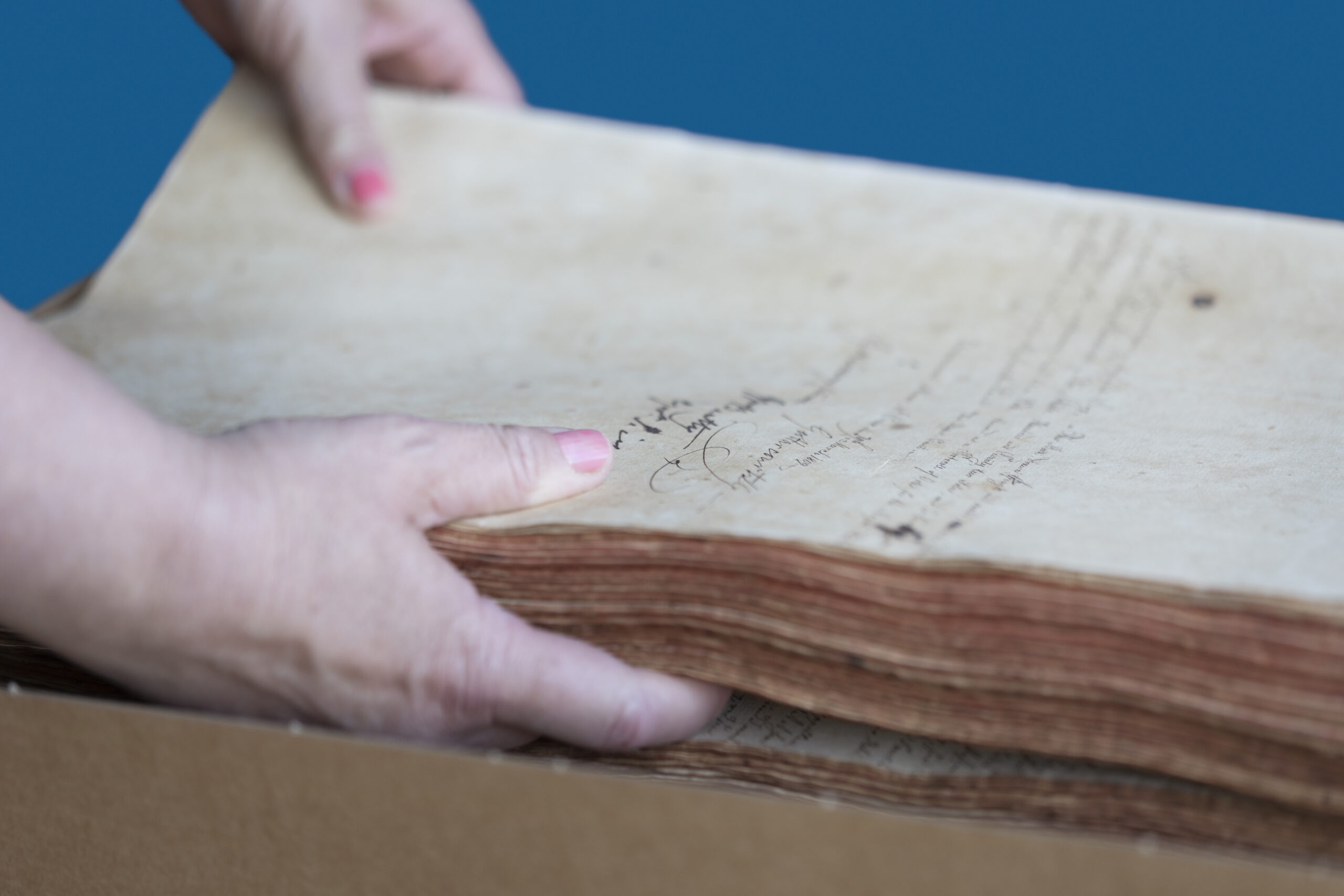
The National Archives receives materials both in paper form and as born-digital data. Collectively, we refer to the papers and data we store as archival records.
Archive creators
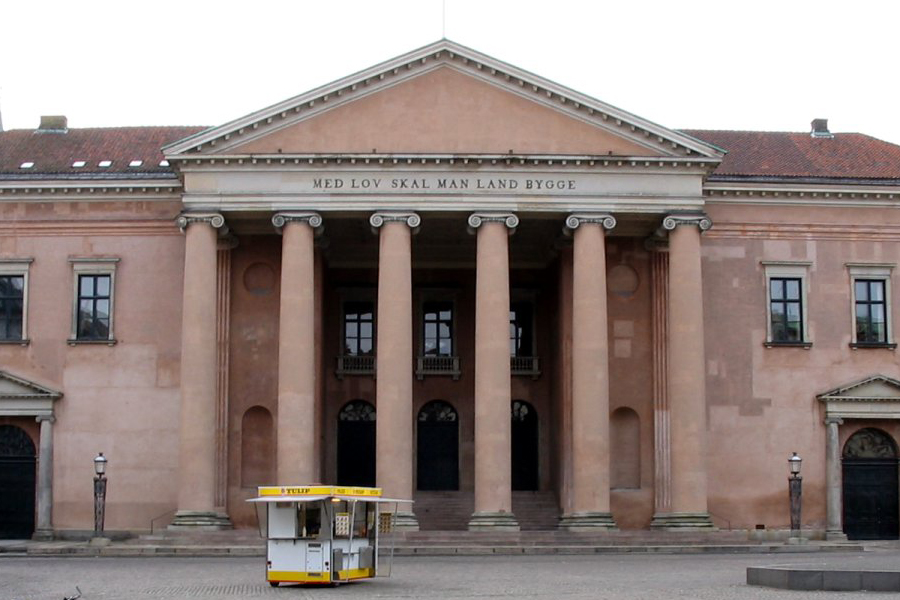
Archival records in the National Archives are organized under the archive creator – the entity that created (and submitted) the records. Archive creators can include authorities, institutions, businesses, organizations, or private individuals.
Archive series
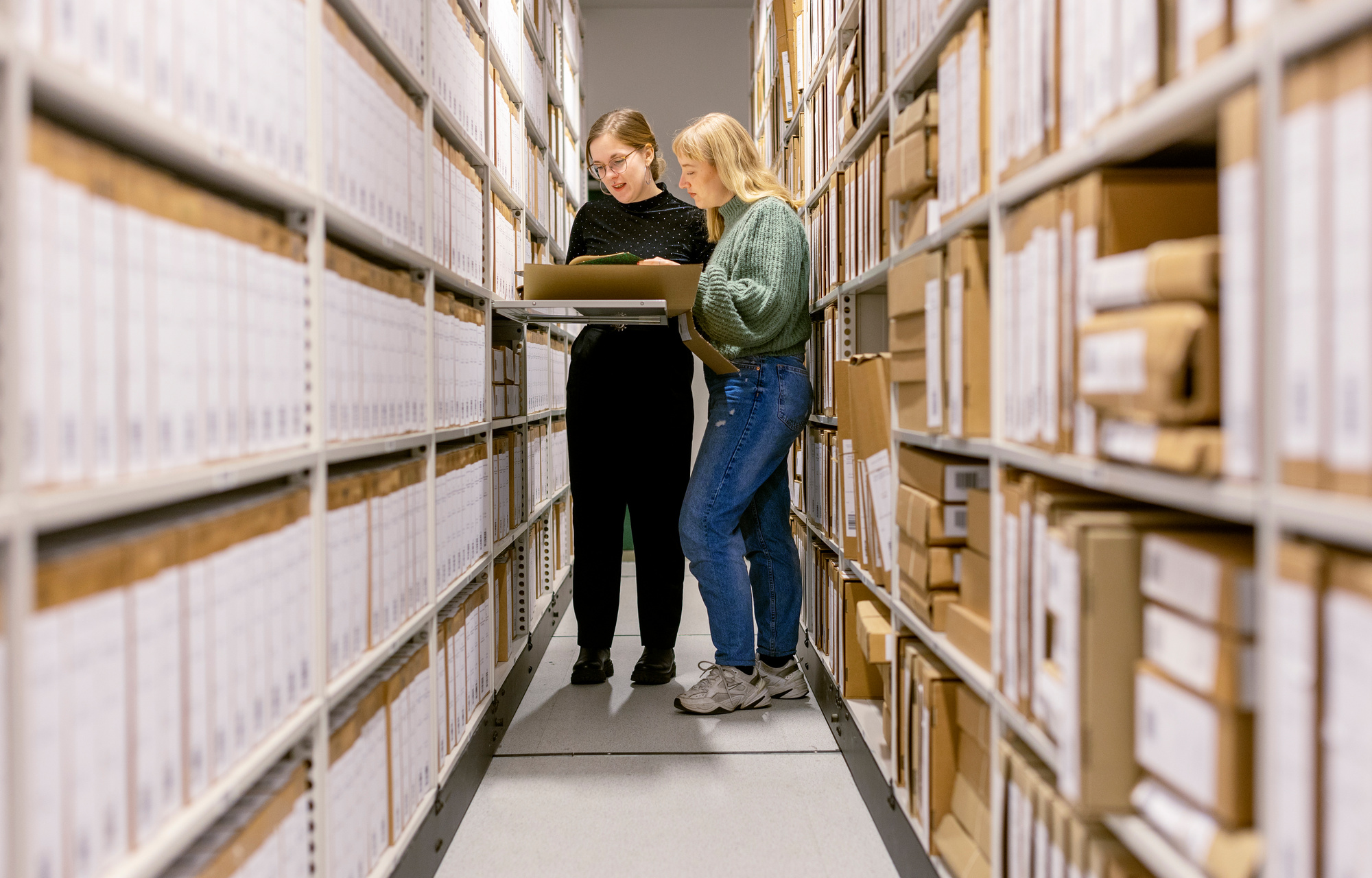
All archival records belong to an archive series. A series may consist of one or many packages. Series with multiple packages are organized according to a uniform system, such as by year and case number.
Units / packages
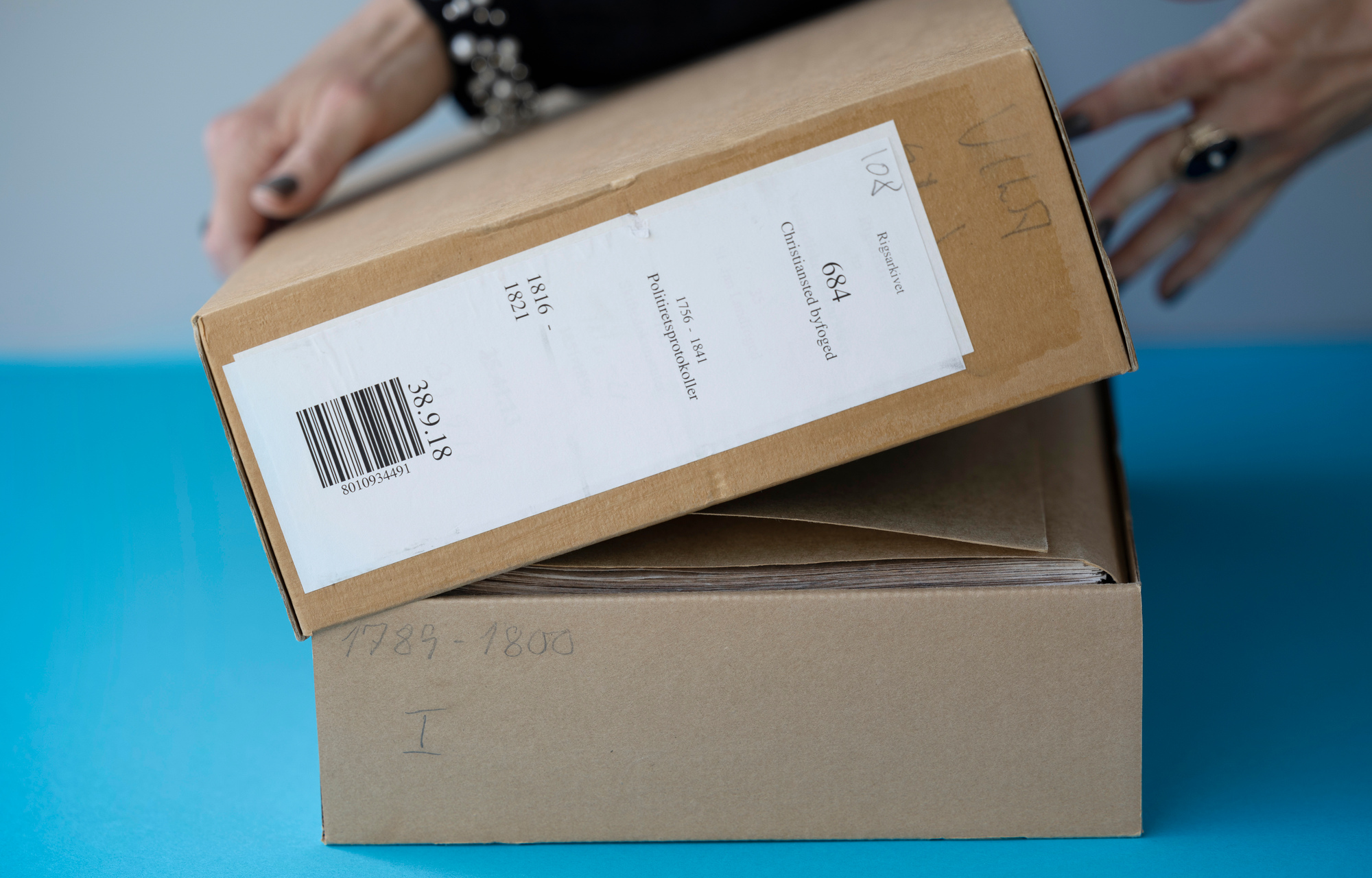
Paper records are stored in packages. When ordering materials for the reading room, you always request one package at a time. All packages are catalogued and can be searched in Daisy.
Cases
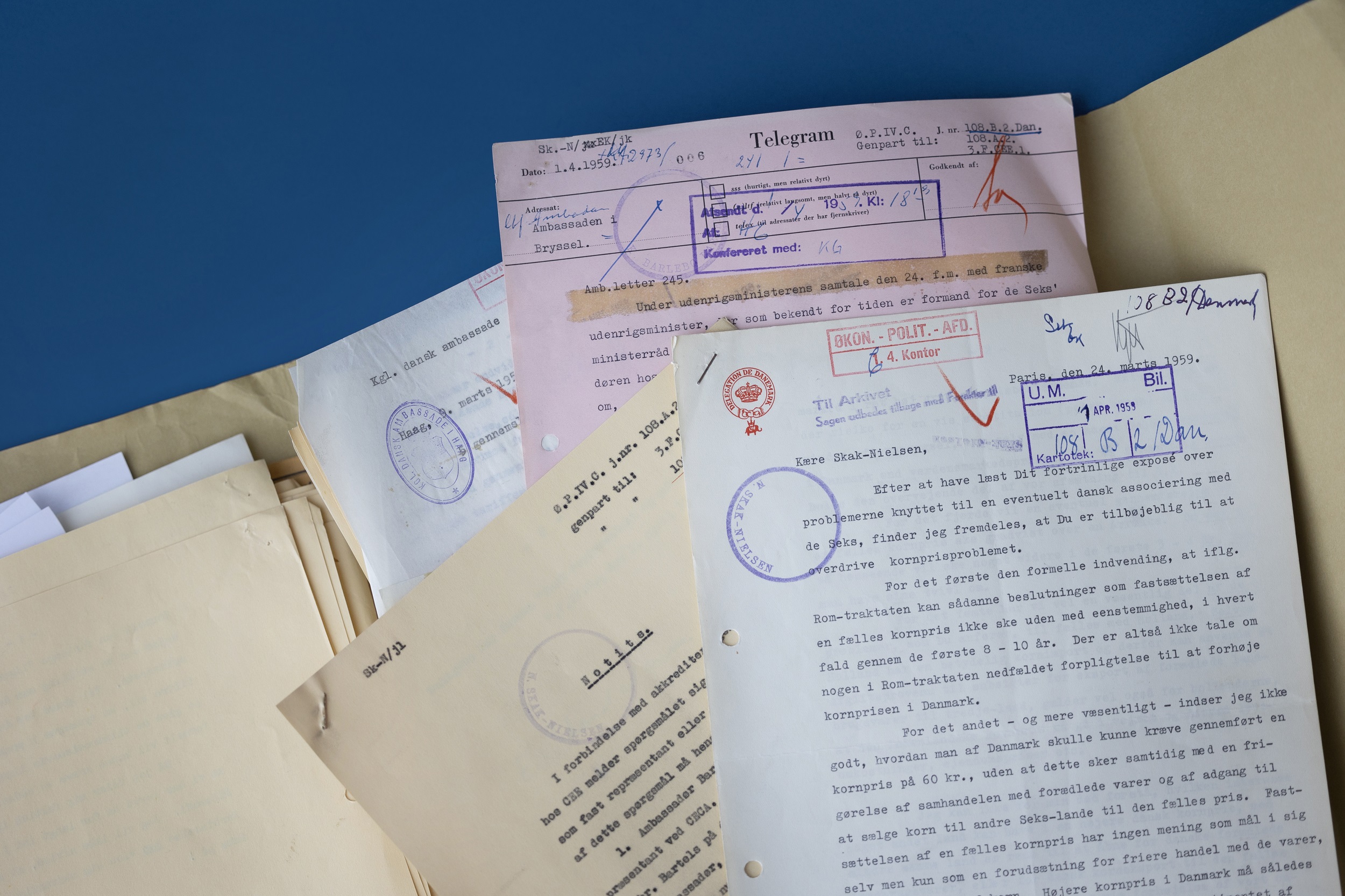
Archival records created by the authorities are typically divided into cases by period. Cases are usually numbered, and case numbers are typically found in finding aids.
Finding aids
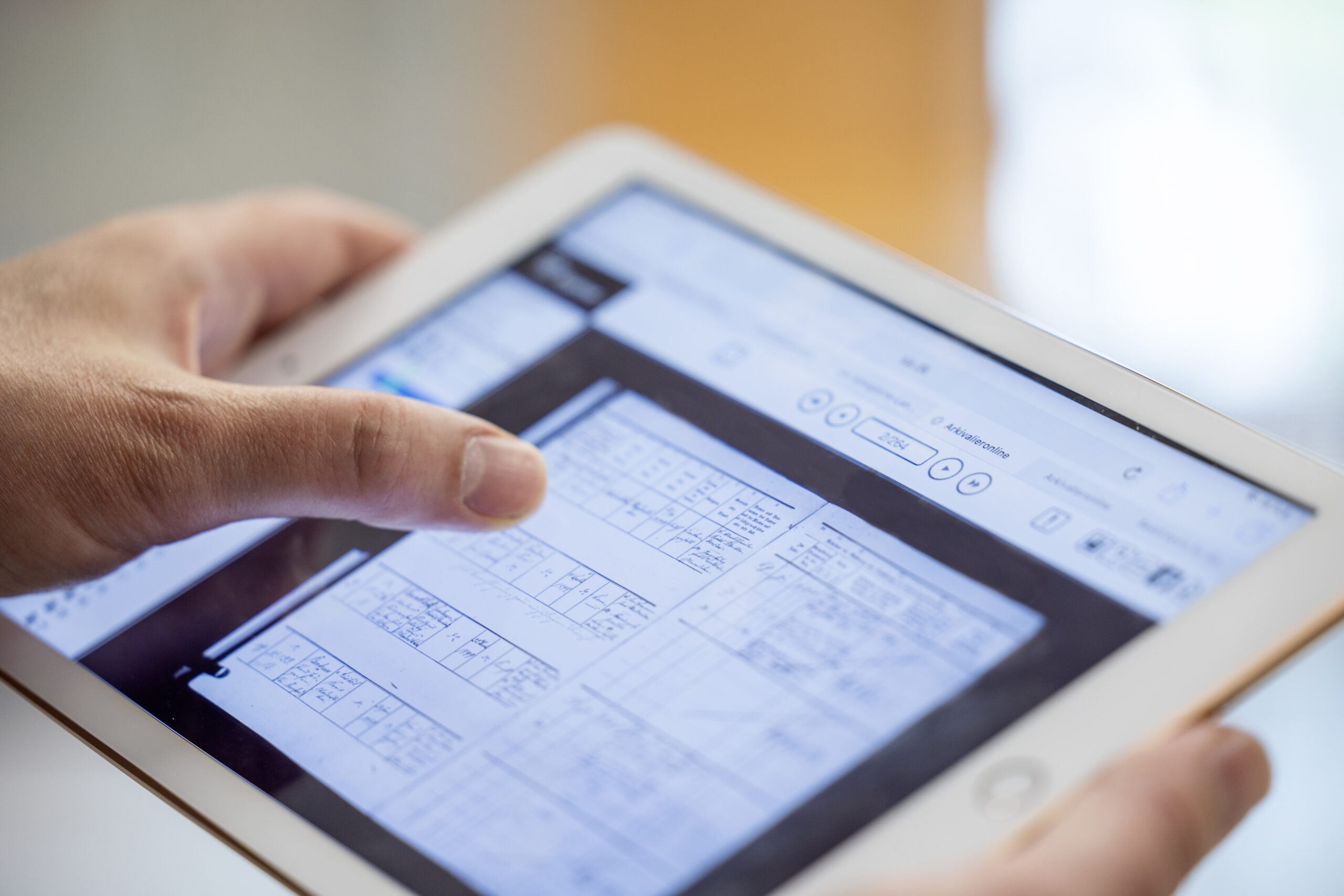
Finding aids contain references to cases, such as case numbers, and make it possible to locate the case within the archive series. Finding aids can include name registers, card indexes, journals, case lists, etc. Many finding aids are digitized and available on Arkivalieronline.
Where to start
The Danish National Archives contain many different types for records, but as a genealogist four particular types of records will be especially useful when conducting genealogocal research.
Four important types of records
Starting in 1645, all pastors in Denmark have been obliged by law to keep Parish Registers. Most of these have survived from around the 1750s. Some are older and date back to the 1670s or even earlier. Other parishes have been less fortunate and fires, mice, insects etc., destroyed all church records prior to 1814.
Parish Registers from 1812-1814 until now
1812-1814 are important years for Danish genealogists. That is when Danish pastors were instructed to keep two separate copies of Parish Registers – and never to keep them in the same location overnight. For this reason, nearly all parishes have records from those dates onwards!
These Parish Registers are also more “user friendly”. After 1812-1814 the Registers were, for the first time, kept in ledgers designed especially for that purpose. These ‘newer’ Registers contain columns with printed headings, which facilitate searching for particular information without the need to read through the entire volume.
Parish Registers before 1812-1814
Before 1812-1814 most pastors recorded information in some kind of notebook that they had purchased themselves. Normally these older registers were kept chronologically, making the search difficult for people who do not have good knowledge of Danish, and, at the very least, some basic understanding of how to decipher the obsolete style of handwriting that was commonly used in Denmark prior to 1875.
Redacted annotations
To protect special sensitive data, the Danish National Archives has found it necessary to blur the columns with annotations in the parish records’ birth registrations as they are displayed online on our homepage from 1892 onwards (c. 1960). You can apply for permission to access the records.
What information do Parish Registers hold?
The Parish Register will provide information regarding anyone who was born/baptised, confirmed (after 1737), married or died/buried in that particular parish. Only information relating to the particular religious ceremony in question will be recorded there. For example, for a baptism, you will find the date of birth, date of baptism, name of the child, names, occupation and residence of the parents, and names of sponsors and the godmother. But the entry will not tell you who the child later married, or where she/he died. That information must be found where the events took place.
After 1812-14 the registers were kept in forms. Older records may have a more “individual” character. Usually, a parish register can provide you with this information:
Birth – Baptism
- Name of the child
- Names, occupation and residence of parents, godmother, sponsors
Confirmation
- Name of young person
- Place of birth
- Name, occupation and residence of parents or employer
Marriage
- Names of the bride and groom
- Places and dates of birth for the bride and groom
- Parents of bride and groom
- Residence and occupation
- Marriage witnesses
Death
- Name of the deceased
- Date of death and funeral
- Age of the deceased
- Occupation and residence
- Place of birth – names of parents
- Name of husband or wife
The Danish National Archives have preserved microfiche copies of all Danish Parish Registers until 1891. Original Church Registers from parishes within the district, through until approximately 1950, are kept at the Provincial Archives.
Records of birth, confirmation and marriage become accessible after 50 years.
Censuses have been held in Denmark at various intervals. The first census of interest to the Genealogist was held in 1787, and thereafter in 1801, 1834, 1840, 1845, 1850, 1855, 1860, 1870, 1880, 1890, 1901, 1911, 1916, 1921, 1925, 1930, 1940 and 1950.
The census of 1845 is of particular interest, since this was the first census to provide a very important detail for the people listed: “place of birth”.
The census is usually reliable, but…
For the most part the information found in census records is reliable. There are, however, several things that should be noted. The ages recorded in the census – especially the older censuses – may be misleading, particularly if the person listed was elderly. People did not always remember exactly how old they were – in those days there might not have been much difference between 70 and 80.
You may also see “place of birth” where the village name was mistaken for the parish name.
Names may shrink
In the more recent census records one sometimes finds that not all of a person’s names have been listed. From around the 1880s it became quite fashionable to have three, four (or even more!) Christian names. In the census you may find only that name which is in daily use. Thus, Anna Kirstine Olivia Augusta Hansen might simply be listed as “Kirstine Hansen” or even by the abbreviation “Stine Hansen”. If “Stine” was a young child living with her parents, her surname might be omitted altogether and only the surnames of her parents would be recorded.
Information in the census
The census will generally provide the following information:
- Name
- Position in household
- Age
- Marital status
- Place of birth (only after 1845)
- Occupation
- Note (handicaps, etc.)
The Probate Court Records are often vital for the Genealogist since they contain the names and additional details regarding relatives of a deceased person who may be entitled to an inheritance. Most Protocols include a name index, but in order to read the actual text about a specific estate a good knowledge of Danish is essential.
A walk through time
Especially prior to the 1840s, Probate Court Records were often very informative. In addition to the names of heirs and the total value of the Estate, the Protocol often listed and valued all of the deceased’s possessions: furniture, pots and pans, clothes, pillows, sheets, candlesticks, cows, pigs, beehives, etc. A record of this kind is like visiting the home of relatives who have been dead for centuries!
The Probate Court Records will generally provide the following information:
- Name of the deceased
- His or her residence and occupation
- Name of the surviving spouse
- Names of heirs (children, siblings, etc.)
- Names of Guardians
- Account of the Estate
The original Probate Court Records can be found, dating from about 1760-1800 through until the period between 1930 and 1950. Of course, not all older Protocols have been preserved. The Danish National Archives has a number of the older Probate Court Records on microfilm.
Probate Court Records generally become accessible when they are 75 years old.
f your ancestors emigrated after 1868 you may be able to find information regarding them in the Copenhagen Police Records of Emigrants. They would, however, only be listed if they purchased a contract-ticket from an Emigration Agent with an office in Copenhagen.
Why are emigrants listed in Police Archives?
The records kept by the Police were not actually of the emigrants themselves – but rather, of all contracts signed between agents and emigrants. This was done to prevent “crooked” agents from cheating emigrants by taking their money and then “forgetting” to purchase the tickets or help with travel arrangements, etc.
Not all emigrants can be found in the Police Records of Emigrants
If your ancestor – for any reason – travelled independently, you will not find their name listed in the Record of Emigrants! Most people, but not all, contracted with an agent. Sometimes one or two family members (perhaps a father and a grown son, or two brothers, etc.) would be the first to emigrate, and they would later send tickets for the rest of the family.
What information can be found in the Emigration Records?
If you find your ancestor listed in the emigration records, you will also find the following information:
- Full name
- Occupation
- Place of birth and last place of residence
- Age
- Destination
- Contract number
- Date of listing in the Copenhagen Police Records of Emigrants
- Name of the ship
Search The Danish Emigration Archive (‘Det danske udvandrerarkiv’)
What you need to know
The records contained in The Danish National Archives have been gathered from hundreds of local agencies – however, there is no master index or computer file that covers them all, so you will have to know which records to search in.
To find a person in the records you need:
- Full name
- Date and place of birth, marriage or death
- Any known addresses especially during census years.
Starting your search
If only scant information is available about your ancestors, the first step would naturally be to try and get details from elderly relatives or friends. Make note of names, places and dates – even though they may not be totally accurate. If there is no-one left to ask, valuable clues might be found in documents such as:
- Certificates of Birth, Death or Marriage, etc. Make sure to bring copies with if you come personally to the Archives.
- Old letters – look for names, locations and so on.
- Envelopes – look for addresses and postal stamps.
- Photographs – look for the name and address of the photographer.
You may sometimes need to widen your search, when looking for people and places whose names have been passed down through the family.
Many emigrants changed their names when arriving in a new country. Either to blend in or simply because local authorities has a hard time spelliing or pronouncing the original name. Common names could also be changed to a more common local spelling.
The name Christian for instance, might be the local spelling of the names Kristian, Kristen, Kresten, Chresten or Christen.
Names of places could also have been misspelt. In addition, if an emigrant was asked where she come from, the answer might not have been their place of birth, but rather the name of the city or village that was their last place of residence before emigration.
Alternatively, if the residence was near a market town or a large city, the name of this more “important” landmark might have been given. Thus “Marie Jensen” from the suburb of Valby might easily have become known as “Mary Johnson from Copenhagen”.
Most families have an assortment of stories regarding their ancestors. Such ‘history’ may contain valuable information, but family tradition – particularly stories handed down verbally from one generation to the next – can often contain errors.
These stories may at some point have been misremembered, exaggerated or even changed on purpose. It’s important to bear this in mind, if you use information from these stories in your genealogical research.
Good archival references last forever
We recommend that you always create proper archival references, even for materials found online, such as on Arkivalieronline. This ensures that both you and others can relocate the documents, regardless of how they are presented online in the future.
Read more about archival references on page 15 in the guide The Danish National Archives and Its Research Aids I, Volume I.
How to write an archival reference
- Archival institution
- Record creator
- Record series
- Case number or page number
- Period or date
Example:
Danish National Archives, Statsamtet Overpræsidiet, AJ cases, No. 1325, 1890.
See the document from the example on Arkivalieronline.
Start your genealogical research online
Once you have gathered all the information your family can provide, it is time to consult the archival records—first online and possibly later in one of the reading rooms of the Danish National Archives.
New genealogists typically start by finding the most basic information about each individual in the family: name, birth date and place, death date and place, as well as the person’s spouse and parents. This information is usually found by browsing through parish registers and census records, which are available online.
If you are searching for relatives born more than 100 years ago, you can also search for individuals by name in transcribed census records and parish registers.
Related content

Online records
In Arkivalieronline you will find all of the Danish National Archives’ digitized documents (mainly danish). Note that only about 2% of the collections are digitized.

Search the collections – Get started!
With ‘Search the Collections’, you can search across the Danish National Archives’ collections and systems. Learn how to search and get tips for finding archival records, transcripts, and digitally created data in the National Archives’ collections.

Danish names
This page provides some basic information about traditions regarding Danish names. This may be helpful when searching for Danish ancestors.